Why an F1 car shakes after a lock-up
A brief skid can leave a lasting reminder on every lap.
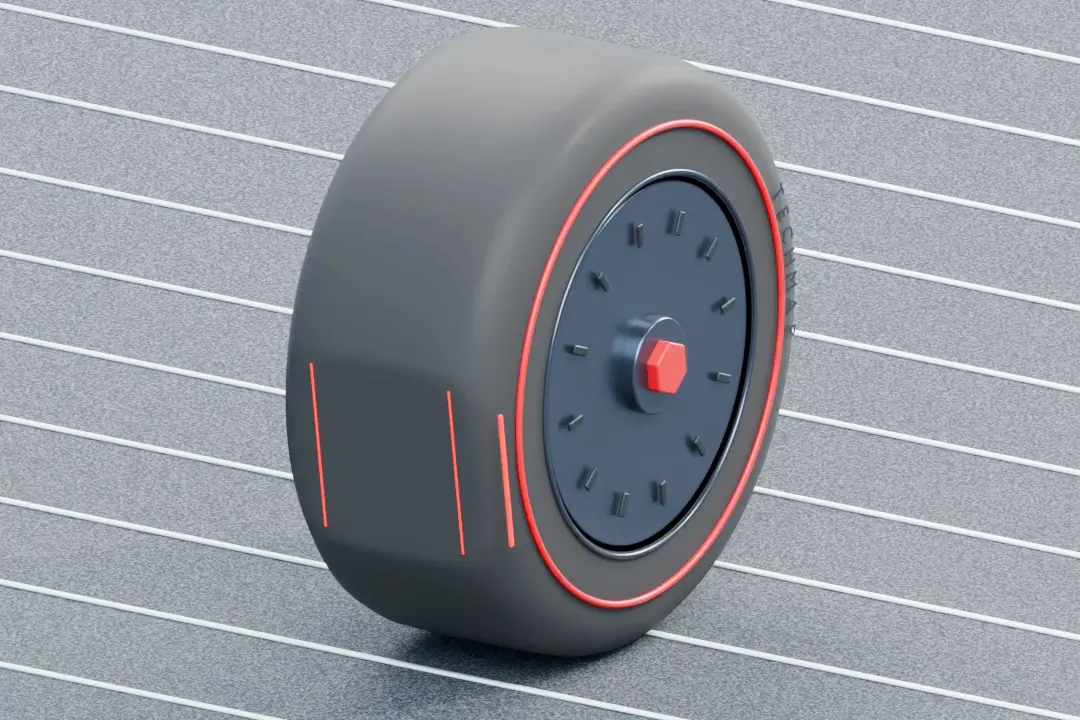
How does a lock-up create a flat spot?
With a rolling tyre, successive areas of tread meet the track. During a lock-up, rotation stops while the car is still moving. The road can then abrade one area instead of spreading that contact around the circumference.
- LockThe wheel stops rotating.
- SlideThe same patch scrapes along the road.
- Roll againThe altered patch returns on every turn.
Formula 1’s lock-up definition describes the stopped wheel and the possible flat spot. The lock-up is the event; the flat spot is damage that may remain afterwards. They are related, but they are not interchangeable terms.
Why does the vibration continue after braking?
Releasing the brake can let the wheel rotate again. It does not put the removed rubber back. The tyre’s uneven profile creates a repeated disturbance as it rolls, which the driver can feel through the car.
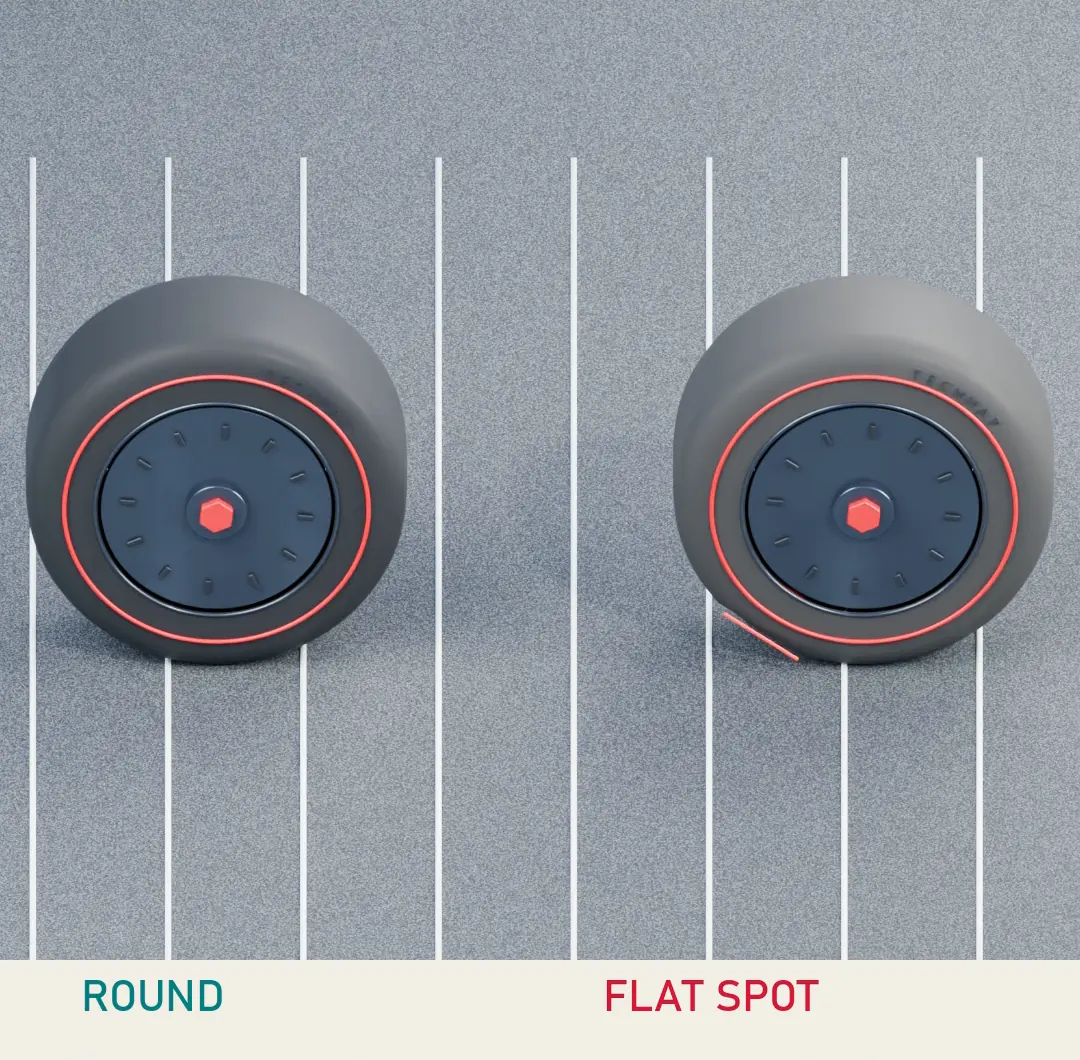
Aston Martin’s glossary links flat-spot vibration to the tyre no longer being round. Honda’s technical glossary also describes shocks reaching the driver through the steering. The comparison above makes that geometric difference visible.
The important distinction is between the wheel turning again and the tyre being unchanged. The first can happen immediately after a lock-up; the second does not follow from it.
What does a flat spot do to an F1 car?
Formula 1’s glossary identifies reduced grip as well as vibration. A driver can therefore face a performance problem in addition to discomfort. Aston Martin notes that flat spots can also originate during a spin, so heavy braking is not the only context.
Honda describes a further complication: the damaged area can be more prone to locking again, concentrating additional wear there. This is a possible worsening cycle, not a prediction that every brief lock-up ruins a tyre.
There is no universal pit-stop threshold in this guide. A visible puff of smoke does not measure the depth of a flat spot, and a television camera cannot establish the tyre’s condition or the team’s decision from that alone.
What should you watch for during a race?
- Start with the event. Was there a clear lock-up or spin?
- Listen to the next radio message. A report of persistent vibration adds information beyond the smoke.
- Keep the diagnosis open. Shaking alone does not prove a flat spot; look for the team’s explanation and any tyre inspection.
Our illustration shows one mechanism, not a diagnosis of every vibrating car. It also does not assign a lap-time loss to a visible patch.
Explore lock-ups, driver control and F1 braking →Flat-spot FAQ
Is a flat spot the same as a puncture?
No. This term describes local tread wear and a changed profile. It does not itself mean the tyre has lost air.
Does every lock-up create a serious flat spot?
No. The official lock-up explanation describes a possible consequence. Neither smoke nor the word “lock-up” establishes the severity of any lasting damage.
Does every vibration mean flat-spot damage?
No. This guide explains how a flat spot can cause vibration. It does not establish the reverse: that all vibration has the same cause.
Sources and illustration notes
Checked on . These sources support the physical mechanism and terminology. This article makes no season-specific tyre-dimension, legal-limit or race-use claim.
- Formula 1 glossary: flat spot
- Formula 1 glossary: lock-up
- Honda: flat-spot mechanism and steering vibration (Japanese)
- Aston Martin dictionary: flatspot (2021; terminology only)
Stills reuse our own final published flat-spot film. Geometry is illustrative and exaggerated, not supplier CAD, a real tyre photograph or measured performance data. F1 TECH MAP UPDATE is an independent, unofficial fan project.