Why F1 cars have no ABS
Lock-ups, driver control and the difference between anti-lock brakes and brake-by-wire.
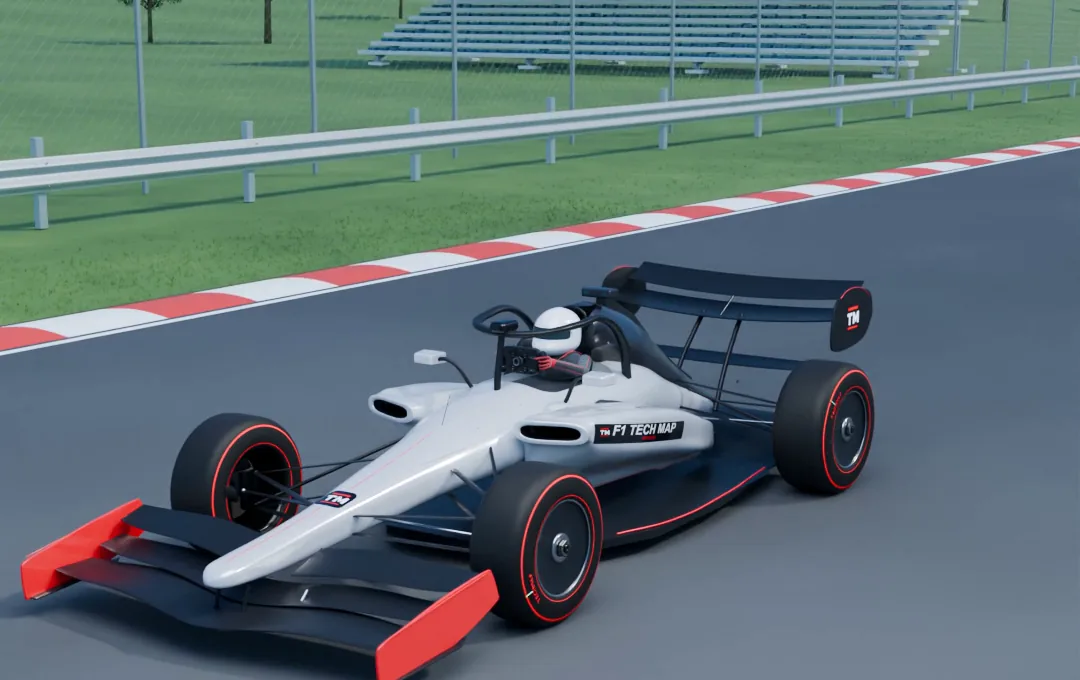
Why is ABS banned in F1?
The immediate answer is a rule, not a lack of technology: Article C11.4.1 of the 2026 FIA technical regulations. A road-style anti-lock controller would conflict with it.
The prohibition does not, by itself, establish the FIA’s motive. It would be misleading to present weight, speed or driver ability as the documented reason without further evidence.
The practical result is that the driver has to manage the tyre’s braking limit. It does not mean an F1 car has no brake electronics.
What is an F1 lock-up?
A lock-up happens when a wheel stops rotating while the car is still moving. Its tyre then slides over the track instead of rolling. Before full locking, a braking tyre can already be rotating more slowly than its road speed would suggest; some slip is normal during braking.
A locked front tyre cannot provide the same steering response as one operating near its useful grip limit. The car may run wide even though the driver has turned the steering wheel. Sliding can also wear one patch of the tread into a flat spot. Pirelli explains this connection between lock-ups, tyre wear and understeer.
Smoke is an easy clue on television, but it is not a complete diagnosis. A brief lock and a long slide are different events; one image cannot tell you the tyre’s condition or prove a brake failure.
What would ABS do differently?
On an ABS-equipped road car, wheel-speed sensors feed an electronic controller. When a wheel is approaching lock, a hydraulic unit can reduce pressure at that brake. As the wheel recovers, pressure can build again. This repeated adjustment helps keep the car steerable during heavy braking. Bosch describes the sensor, controller and hydraulic unit.
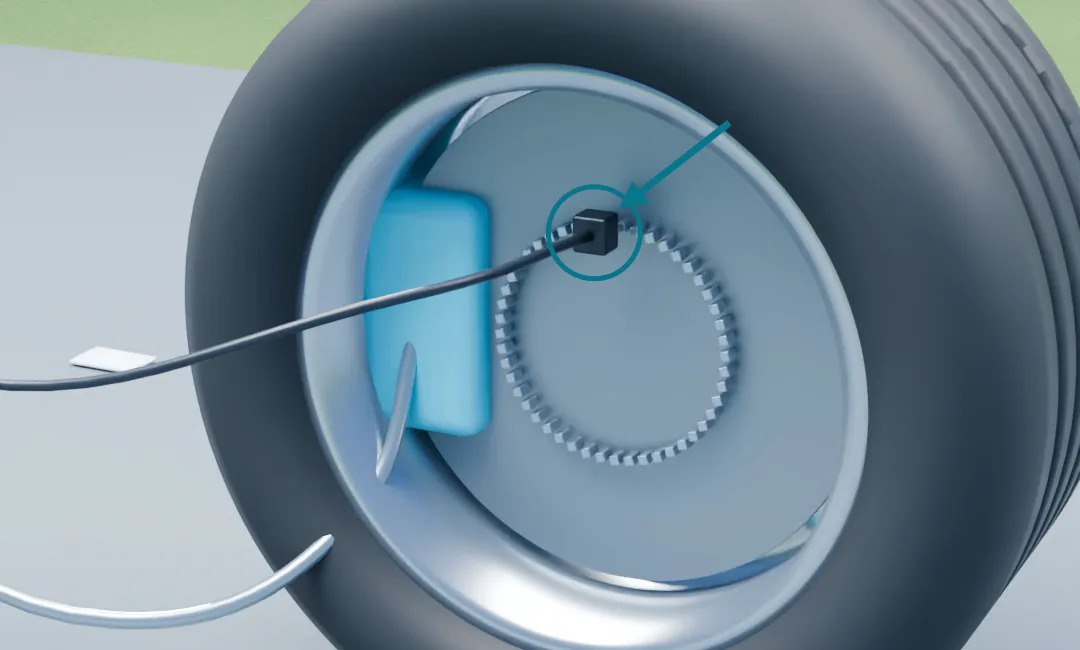
- SenseMonitor wheel rotation.
- ReduceRelieve pressure as locking approaches.
- RebuildApply more pressure as rotation recovers.
This is a comparison of control principles, not a stopping-distance test between a road car and an F1 car. Tyres, surfaces, speed and aerodynamic load all matter. A car with no ABS is not automatically a car that stops faster.
How do F1 drivers avoid locking the brakes?
They adjust pedal effort to the grip available at that moment. Braking is not just one fixed push all the way to the corner.
At high speed, aerodynamic downforce helps load the tyres. As the car slows, that aerodynamic contribution falls, so the braking demand the tyres can accept changes too. Drivers generally apply a strong initial input and ease it as speed drops and they begin to turn. Mercedes explains why falling downforce makes this release important.
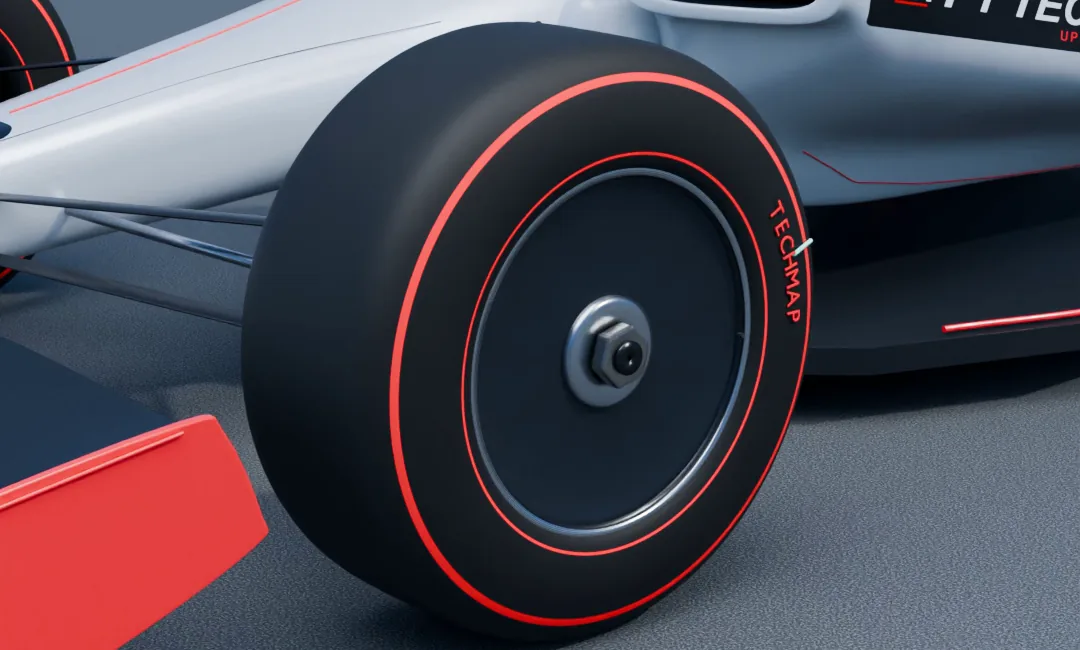
Drivers can also adjust brake balance: the split of braking effort between the front and rear. Moving it changes the car’s behaviour, rather than adding an automatic anti-lock safety net. Formula 1’s glossary defines brake balance and rear brake-by-wire.
A useful viewing question is therefore not only “Did the driver brake late?” Ask “How did the braking demand change as the car slowed?” The footage may show the consequence without revealing every cause.
If ABS is banned, why is brake-by-wire allowed?
Because the two systems do different jobs. At the rear of an F1 car, braking involves the friction brakes, resistance from the engine and energy recovery through the MGU-K. Rear brake-by-wire helps coordinate the braking response as those contributions change. Mercedes’ brake-system explainer describes that coordination.
Prevent wheel locking
Adjust brake pressure in response to a wheel approaching lock.
Coordinate rear braking
Manage the rear braking response within the FIA’s limits. No anti-lock control.
Article C11.6 permits a powered rear brake control system subject to conditions, including a hydraulic fallback if it is disabled. That permission does not cancel the anti-lock prohibition in C11.4.1. The 2026 rulebook still makes this distinction; “electronic” and “ABS” are not synonyms.
What to watch at the next Grand Prix
- Look at the tyre, not just the smoke. Does a wheel briefly stop rotating while the car continues forward?
- Follow the corner entry. Does the car recover its line, run wide or lose the intended apex?
- Separate observation from explanation. A replay can show a lock-up; it cannot reveal every setting, surface change or technical issue behind it.
How does this connect to car upgrades?
Brake ducts are not only cooling openings. Their shape can also influence airflow around the wheel. Brembo explains the cooling and aerodynamic roles of brake ventilation. When a team declares a wheel-area change, check whether its stated aim concerns cooling, airflow or both. Do not assume a new duct is an anti-lock device.
Explore front suspension and wheel-area upgrades on the car map →Our map groups submitted changes by location. A declaration is evidence of a stated change and aim, not proof of race use or a measured performance gain.
F1 braking FAQ
Do 2026 F1 cars have ABS?
No. The 2026 technical regulations prohibit anti-lock braking control. Rear brake-by-wire remains permitted within the specified limits.
Is brake-by-wire the same as ABS?
No. Brake-by-wire describes electronic brake control; ABS describes control intended to prevent wheel locking. Permission for the former does not imply permission for the latter.
Can an F1 lock-up damage a tyre?
Yes. Sliding can wear the tread locally and create a flat spot. The severity depends on the event; not every brief lock has the same consequence.
Does smoke mean the brakes have failed?
Not on its own. A smoking, sliding tyre is not proof of a failed brake system. Establishing the cause needs more than a replay or still image.
Sources and editorial notes
Rules checked on against the FIA’s published 2026 Section C, Issue 21, dated 19 October. Older team and supplier explainers below are used for general operating principles, not as evidence of every 2026 hardware specification.
- FIA: 2026 Technical Regulations, C11.4.1 and C11.6, page C117 (PDF page 117)
- Bosch: how an anti-lock braking system operates
- Pirelli: lock-ups, flat spots and understeer
- Mercedes: Formula One brake systems explained
- Mercedes: downforce and the braking phase
- Formula 1: brake balance and brake-by-wire glossary
- Brembo: brake ventilation and wheel-area airflow
Images reuse F1 TECH MAP UPDATE’s original SNS production assets. All are simplified educational renders, not race photography, team CAD, telemetry or a performance simulation. This is an independent, unofficial fan project and a spectator’s guide, not road-driving or vehicle-service advice.