Slipstream vs dirty air
Why following an F1 car can help on straights and hurt in corners.
Drag and downforce are not the same thing
Drag opposes the car’s motion. Downforce acts towards the track and helps the tyres develop grip. That gives an F1 car two different reasons to care about the air around it.
Less drag can help
Less aerodynamic resistance makes it easier for the car to gain speed.
Less downforce can hurt
Less aerodynamic load can reduce the grip available for turning.
Formula 1’s explanation with a McLaren aerodynamicist sets out why wings generate downforce and why teams balance cornering performance against resistance on the straights. The car is not trying to maximise every aerodynamic force at once.
What is a slipstream, or a tow, in F1?
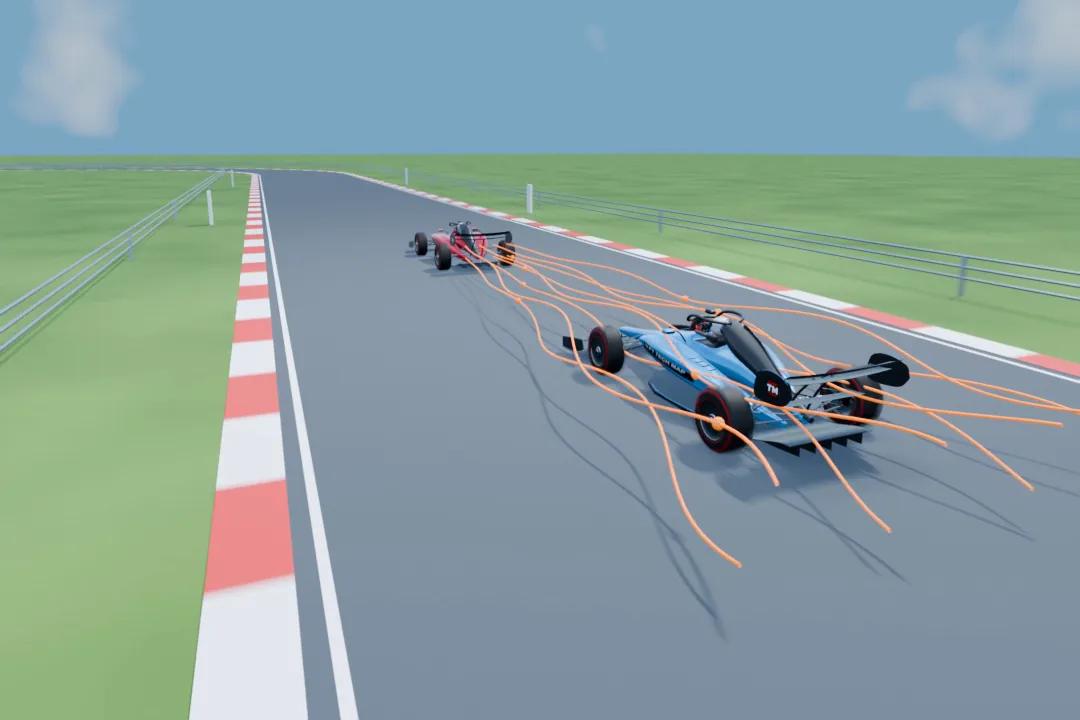
A car moving through the air leaves a wake behind it. A following car can encounter less aerodynamic resistance in that region, allowing it to build speed more easily than it would in undisturbed air. That benefit is the slipstream, also called a tow. The official F1 glossary defines both terms together.
The advantage is particularly noticeable on a long straight. It can help set up an overtake, but a tow is also useful in qualifying. Honda’s technical glossary describes both uses (Japanese).
It is not extra engine power, a button or a fixed speed bonus. The useful comparison is how much resistance the following car faces, not whether it has been given a new source of propulsion. Seeing a car close quickly does not tell you how much of that gain came from the tow rather than its exit speed or other performance differences.
What is dirty air, and why does it matter in corners?
The wake is also disturbed airflow. The following car’s aerodynamic surfaces no longer receive the same incoming flow as they would in clean air, and their downforce can fall. F1’s glossary distinguishes dirty air from clean air.
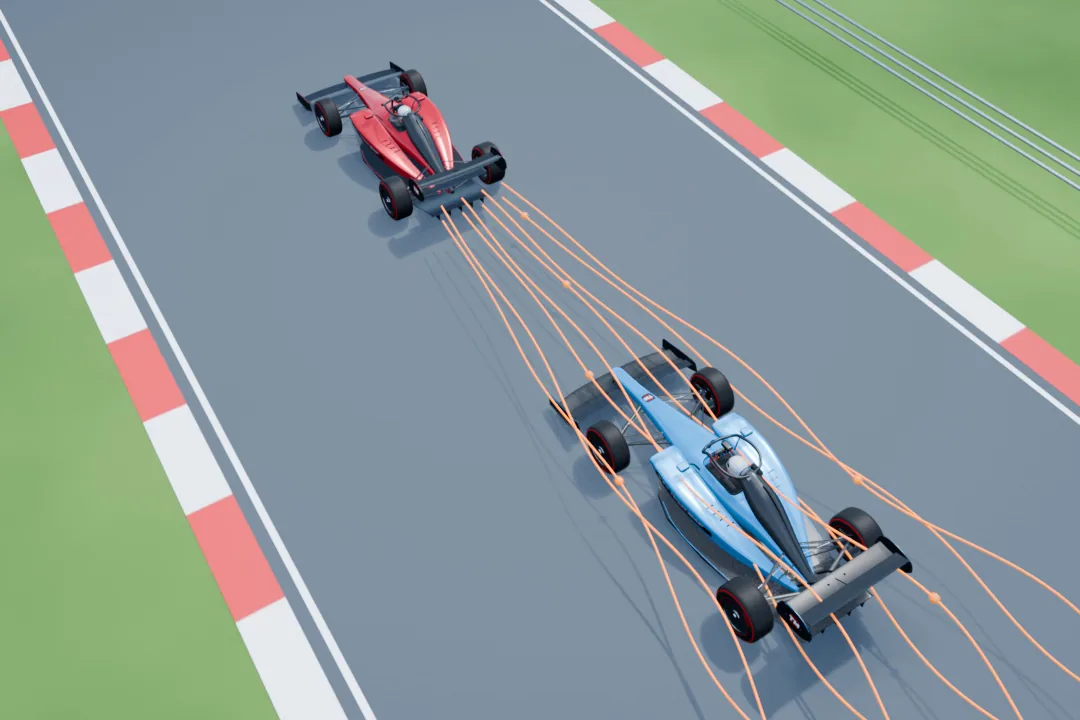
A driver who needs grip to turn may therefore find the corner harder, even after gaining ground on the straight. If the front of the car cannot produce the required response, it can run wider than intended: understeer. F1 defines understeer by the car turning less than the driver’s steering input asks for.
That is a possible consequence, not an automatic diagnosis. Dirty air is not the only reason for understeer, and reduced aerodynamic grip does not mean the tyres suddenly have no grip at all. A wide line in one replay cannot establish the cause on its own.
Does this still matter with the 2026 cars?
The basic distinction between drag and downforce still matters. What changes between generations is the car’s shape, how it manages its wake and how it responds when following another car.
Formula 1’s 2026 aerodynamics explainer describes the changes to the wings, floor and airflow management intended to make close following easier. An intended improvement is not proof that every following penalty has disappeared, or that every team has the same response.
Do not copy a downforce-loss percentage from an older car and treat it as a universal 2026 figure. Nor should the natural tow be confused with the car changing its wing configuration. Our Active Aero guide covers that separate system.
How to spot the trade-off on television
- Watch the exitNote the gap before the straight, not only at its end.
- Watch the towSee whether the chaser gains while following on the straight.
- Watch the turnSee whether it holds its line or loses ground in the corner.
This is a way to ask better questions, not to calculate a car’s aerodynamic performance from a broadcast. A gap change is an observation. “The front wing lost a particular amount of load” is a measurement claim requiring evidence that the replay does not provide.
What does an upgrade description tell you?
When a team describes a change to its front wing, floor or rear bodywork, look for its stated aim. Is the team talking about load, resistance or managing airflow? Those are useful questions to bring to the part map. They do not prove that the change improved following performance.
Explore front-wing upgrades on the car map →Our tracker records submitted changes and their stated aims. A submission alone does not confirm race use or a measured lap-time benefit.
Slipstream and dirty air FAQ
Are slipstream and dirty air opposites?
Not strictly. They describe different effects of following in another car’s wake. A drag benefit and a downforce penalty can exist at the same time.
Is dirty air dust, tyre smoke or exhaust?
Here, “dirty” means disturbed airflow, not visible dirt. The amber lines in our illustrations are a visual teaching aid, not something you would see in race footage.
Does a tow guarantee an overtake?
No. It can help the following car close on a straight, but gaining ground is not the same as completing a pass. The rest of the corner and the race situation still matter.
Can you measure dirty air from the gap alone?
No. A time gap is not a measurement of airflow or downforce. Avoid turning one timing number into a universal aerodynamic-loss figure.
Sources and illustration notes
Sources checked on . This is an introductory explanation of aerodynamic principles, not a team-specific analysis, a regulatory compliance assessment or a numerical performance model.
- Formula 1 glossary: slipstream / tow
- Formula 1 glossary: clean air, dirty air, downforce and drag
- Formula 1 glossary: understeer
- F1 Explains with McLaren: downforce and wings (2024; basic principles)
- Formula 1: the 2026 aerodynamic concept
- Honda technical glossary: slipstream (Japanese)
Images reuse our original SNS film. Cars are generic educational 3D models, not actual team CAD or race photographs. The airflow lines and driving paths are schematic, not CFD, telemetry or a measured speed comparison. F1 TECH MAP UPDATE is an independent, unofficial fan project.